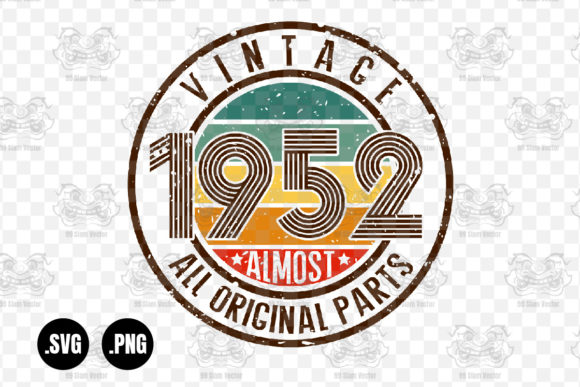
Reviewing Vintage 1952 Almost All Original Parts for Embroidery
As a designer who has spent countless hours digitizing and stitching out files for clients, I have learned that not every graphic translates well to thread. When I first encountered Vintage 1952 Almost All Original Parts, my initial reaction was one of cautious optimism. The phrase itself carries a specific cultural weight—it is humorous, self-deprecating, and instantly recognizable to anyone celebrating a milestone birthday. However, as an embroidery product reviewer, I look past the joke to evaluate the structural integrity of the design. Is this merely a funny quote, or is it a viable asset for a serious craft business?
The product description notes that this is available as an SVG and PNG file, which suggests it is primarily a vector graphic intended for cutting machines like Cricut or Silhouette, as well as printing. For those of us in the embroidery world, this distinction is critical. While the listing mentions it is great for vinyl and designing, using a standard SVG for machine embroidery requires a different mindset than using a pre-digitized embroidery file. Let us break down how this specific design performs when translated from a digital graphic into a tangible, stitched reality.
The Aesthetic Appeal and Market Fit
The mood of Vintage 1952 Almost All Original Parts is playful yet classic. It taps into the nostalgia market without being overly sentimental. For Etsy sellers and small shop owners, this is gold. It appeals directly to the demographic buying gifts for parents, grandparents, or friends turning seventy-two. The visual personality is clean and bold, which is essential for readability. In the realm of Crafts and Graphics, clarity is king. If the text is too ornate or the details too fine, the message gets lost in the stitch texture.
I imagine this design working beautifully on a custom apparel piece, such as a high-quality cotton sweatshirt or a structured tote bag. The humor lands best when the presentation is professional. A sloppy stitch-out ruins the joke, but a crisp, well-executed design elevates the garment from a simple gift to a boutique-quality item. This is where the difference between a basic PNG print and a carefully digitized embroidery project becomes apparent.
Real-World Application: The Sweatshirt Test
To test the viability of this design, I visualized placing it on a heather gray crewneck sweatshirt. This is a popular item for holiday embroidery and personalized gifts. The contrast between dark thread and light fabric, or vice versa, is crucial here. Since the design relies on text, legibility is the primary concern. If you are converting the SVG yourself, you must ensure that the font weight is sufficient to hold a satin stitch or a dense fill stitch without collapsing.
For a handmade product like this, the placement matters. Centered on the chest, it acts as a statement piece. On the back, it might feel too large unless scaled down significantly. I recommend creating a printable mockup first to gauge the proportions. Does the phrase "Almost All Original Parts" fit comfortably within your standard hoop size? If you are working with a 4x4 inch hoop, you may need to stack the text or reduce the font size, which could compromise the stitch density and clarity.
Technical Considerations for Stitchers
Since this asset is provided as an SVG and PNG, it is not a ready-to-stitch embroidery file. This is a vital point for hobbyists and professional embroiderers alike. You cannot simply load an SVG into most home embroidery machines. You must use digitizing software to convert the vector paths into stitch data. This process involves defining stitch types—such as satin stitch for borders and fill stitch for larger areas—and setting the underlay.
When digitizing Vintage 1952 Almost All Original Parts, pay close attention to the letter spacing. Tight kerning can cause threads to bunch up, creating a messy, raised appearance that lacks professionalism. Conversely, spacing that is too wide can leave gaps in the fabric, especially on stretchy materials. I advise testing the design on scrap fabric that matches your final project. Check the thread color contrast; a monochrome look often works best for vintage-themed designs, but a pop of color in the year "1952" could add visual interest.
Stabilizer choice is another non-negotiable factor. For a sweatshirt or tote bag design, a cut-away stabilizer provides the necessary support to prevent puckering, especially if the stitch density is high. If you are attempting this on a cap or curved surface, the challenge increases. Curved surfaces distort the design, so careful hooping and possibly a lighter stitch count are required to maintain the shape of the letters.
Navigating Fabric and Texture Challenges
Not all fabrics behave the same way. If you plan to use this design on thin fabric, such as a baby item or a lightweight t-shirt, you must be cautious. Heavy stitch densities can pull and distort delicate materials. In such cases, consider using an applique design technique where the text is cut from felt or fabric and then stitched down with a running stitch or satin border. This reduces the amount of thread on the garment and keeps the item soft and comfortable.
Textured fabrics like terry cloth towels or fluffy blankets present their own hurdles. The pile of the fabric can hide fine details. For Vintage 1952 Almost All Original Parts, ensure that the font is bold enough to stand out against the texture. Avoid intricate serifs or thin lines that might get lost in the nap of the fabric. A test stitch on the actual material is the only way to confirm this before committing to the final product.
Commercial Viability and Brand Consistency
For commercial embroidery projects, consistency is key. If you are building a brand around vintage humor, this design fits well. However, you must verify the licensing terms. The description states the files are great for printing and cutting, but it does not explicitly detail commercial rights for embroidered goods. Always confirm whether the license allows you to sell finished physical items. Ethical practice and legal compliance protect your small business and build trust with your customers.
Moreover, consider how this design aligns with your other design assets. Does it match the aesthetic of your existing shop? A cohesive look helps buyers recognize your brand. Whether you are selling at craft fairs or online, the quality of the stitch-out reflects your professionalism. A well-executed Vintage 1952 Almost All Original Parts design can become a bestseller, but only if the technical execution matches the cleverness of the quote.
Final Verdict for Makers
In conclusion, Vintage 1952 Almost All Original Parts is a strong candidate for personalized gifts and custom apparel, provided you approach it with technical care. It is not a plug-and-play embroidery file, so be prepared to invest time in digitizing or adapting the SVG for your machine. Focus on stitch density, stabilizer support, and fabric compatibility. When done correctly, this design offers high visual appeal and customer engagement. It transforms a simple birthday gag into a cherished keepsake. For the diligent maker, it is a valuable addition to your library of graphics, offering both fun and functionality in equal measure.