So Many Flip Flops So Little Time: A Designer Review
As a designer who has spent years navigating the intersection of digital assets and physical thread, I approach every new machine embroidery design with a critical eye. We all know the feeling of downloading a file, only to realize it looks nothing like the preview once stitched onto fabric. When I first encountered So Many Flip Flops so Little Time, designed by Caty Catherine, I was immediately drawn to its playful energy. It captures that specific summer chaos we all feel when trying to curate our footwear collection. But does this fun concept translate into a professional-grade embroidery project? Let’s dig into how this Graphics asset performs in real-world applications.
The Visual Personality and Design Intent
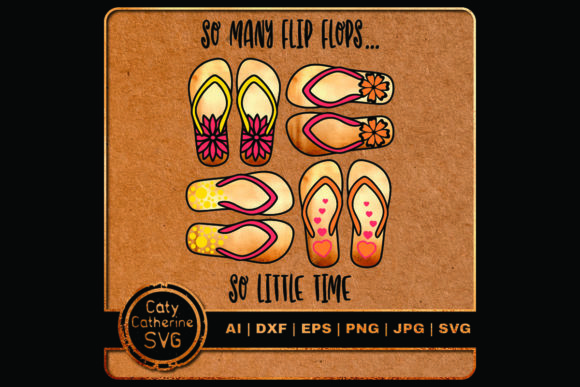
At first glance, the layout of So Many Flip Flops so Little Time is vibrant and busy, which is exactly what the phrase suggests. The visual weight is distributed across multiple flip-flop shapes, creating a sense of movement rather than a static image. For an Etsy seller or a boutique owner looking for seasonal merchandise, this kind of dynamic composition is gold. It breaks the monotony of single-icon designs often seen on basic custom apparel.
The typography is bold and legible, which is crucial for any text-heavy design. In my experience, small lettering can get lost in the noise of a fill stitch, but here, the font size appears generous enough to maintain clarity even at moderate magnifications. The mood is undeniably lighthearted, making it perfect for summer embroidery collections. However, because the design relies on distinct shapes and clear outlines, it demands precision during the digitization process if you are converting it from an SVG to an embroidery file. If you are using the provided formats as a base for your own digitizing, pay close attention to the curves of the straps; these are high-risk areas for stitching errors if not handled correctly.
Real-World Application: The Tote Bag Scenario
To truly test the viability of this design, imagine a practical scenario: You are preparing a limited run of canvas tote bags for a local craft fair. These bags need to be durable, washable, and visually striking enough to catch a customer's eye from three feet away. This is where So Many Flip Flops so Little Time shines.
I envision placing this design centrally on a natural-colored cotton tote. The contrast between the dark thread colors—perhaps navy, coral, and sand—and the beige canvas would make the thread colors pop without overwhelming the fabric texture. Because the design includes multiple elements, it fills the space well without looking sparse. Unlike a simple logo that might look lonely on a large bag, this multi-element layout creates a cohesive tote bag design that feels complete.
For a small shop product like this, the design adds immediate value. Customers perceive items with detailed, custom-looking graphics as higher quality than those with generic transfers. The phrase itself acts as a conversation starter, increasing the likelihood of social media shares and organic marketing for your craft business. Whether you are selling these as personalized gifts for beach lovers or as branded merchandise for a surf shop, the versatility of the theme ensures broad appeal.
Navigating Fabric Challenges and Stitch Density
While the design is robust, it is not without its challenges. As a reviewer, I must highlight where caution is required. If you plan to use So Many Flip Flops so Little Time on stretchy fabrics like jersey knit for sweatshirt embroidery or t-shirts, you must be meticulous about your stabilizer choice. The intricate details of the flip-flop straps can distort if the fabric shifts under tension. A cut-away stabilizer is highly recommended here to support the stitch density and prevent puckering.
Furthermore, consider the hoop size. While the design fits standard hoops, pushing it into a smaller hoop might compress the spacing between the flip flops, causing threads to tangle or the text to become illegible. Always check the dimensions against your machine's capabilities before committing to production. If you are working with textured fabrics like denim or heavy canvas, the running stitch outlines might need to be slightly thicker to ensure they stand out against the weave of the material.
Another consideration is the background color. On dark fabrics, the fill stitch needs to be dense enough to provide full coverage. If the original digitization (if available) has low density, you may see the black fabric showing through the colored stitches, ruining the aesthetic. Conversely, on light fabrics, ensure the backing doesn't show through the gaps in the design. Testing the design on scrap fabric first is non-negotiable. Run a test on both light and dark materials to verify how the thread colors interact with different backgrounds.
Commercial Viability and Professional Presentation
For the digital product sellers and creative entrepreneurs among us, the availability of formats like SVG, EPS, and DXF makes this asset incredibly flexible. You can adapt it for laser cutting, screen printing, or embroidery, maximizing the return on your purchase. However, remember that just because you have the files doesn't mean the design is ready for commercial embroidery without testing.
When creating printable mockups for your online store, ensure the images accurately represent the finished product. Show the design on a variety of items—a cap, a pillow cover, a kitchen towel—to demonstrate its range. Buyers want to see how So Many Flip Flops so Little Time translates from a screen to a tangible object. High-quality photos of the actual finished product build customer trust and reduce return rates.
From a branding perspective, using a design with such a strong personality helps establish a consistent voice for your brand. If your shop focuses on fun, summery, and relatable themes, this design aligns perfectly. It signals to your customers that you understand their lifestyle and interests. This alignment boosts buyer engagement and fosters a loyal community around your handmade goods.
Final Designer Notes and Best Practices
Before you finalize your order or start stitching, keep these practical notes in mind:
- Verify Licensing: Always confirm the licensing terms for commercial embroidery projects. Ensure you are permitted to sell finished goods made with this design, especially if you are producing large quantities.
- Test Stitch Count: If you are digitizing the SVG yourself, aim for a stitch count that balances detail with efficiency. Too many stitches increase production time and cost, while too few compromise quality.
- Check Small Details: Inspect the tiny corners of the flip-flop straps. These areas are prone to birdnesting if the needle speed is too high. Slow down your machine in these sections.
- Stabilizer Strategy: Do not skimp on stabilizers. For applique design elements or dense fills, a tear-away or cut-away stabilizer depending on the fabric type is essential for a crisp finish.
- Color Palette: Experiment with thread colors beyond the obvious. Using unexpected shades can make the design stand out more in a crowded market.
In conclusion, So Many Flip Flops so Little Time is a delightful addition to any summer collection. It offers the perfect blend of humor and style for handmade products ranging from baby embroidery to adult custom apparel. With proper preparation and attention to technical details, this design can elevate your portfolio and drive sales for your small shop product line. Just remember: the best designs are those that are tested, refined, and executed with care.