Reviewing Im Not Bossy Im the Teacher for Embroidery
As a designer who spends half my life staring at stitch simulations and the other half debugging thread breaks, I approach every new machine embroidery design with a healthy dose of skepticism. We have all seen those cute digital files that look perfect on a screen but turn into a tangled mess of bird nests on the hoop. Recently, I spent some time evaluating Im Not Bossy Im the Teacher, a graphic asset that has been circulating among crafters and small business owners. My goal was not just to admire the typography, but to determine if this design holds up under the needle in real-world production scenarios.
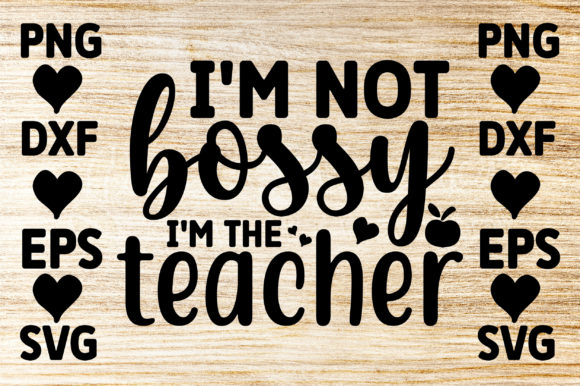
The first impression of Im Not Bossy Im the Teacher is one of confident playfulness. The phrase itself strikes a chord with educators who often find themselves managing chaos with a firm hand. Visually, the layout balances authority with humor. For an embroidery project, this mood is crucial. It is not just about stitching letters; it is about capturing a personality. When I loaded the file into my software, I looked immediately at the stroke weight and spacing. These elements dictate whether a design will survive the pull of the thread or disappear into the fabric grain.
Real-World Application and Fabric Choices
To truly test a design, you must imagine it on a finished product. I visualized Im Not Bossy Im the Teacher on a few different items. The most natural fit, in my opinion, is a canvas tote bag or a sturdy apron. These items provide a flat, stable surface that allows the lettering to breathe. On a tote, the design acts as a statement piece, appealing to teachers who want to carry their classroom spirit into the grocery store or staff lounge. The boldness of the message pairs well with the utilitarian nature of canvas, creating a handmade product that feels both personal and professional.
Another strong candidate is sweatshirt embroidery. A crewneck sweatshirt offers a thick, forgiving fabric texture that can handle moderate stitch density without puckering. However, here is where experience matters. If the design relies heavily on fine details, the fleece or cotton blend of a sweatshirt might obscure smaller elements. I would recommend using a cut-away stabilizer to ensure the garment maintains its shape after multiple washes. For baby embroidery, such as a onesie or a bib, caution is required. The skin of an infant is sensitive, and the back of the embroidery must be clean. If this design includes dense fill stitches, it might be too stiff for a tiny chest, so scaling it down or simplifying the stitch type is essential.
Technical Considerations for Stitching
When working with text-based designs, the choice between satin stitch and fill stitch is critical. Satin stitches create a smooth, shiny column of thread that is excellent for legibility, but they have a maximum width before they become unstable. If Im Not Bossy Im the Teacher uses wide satin columns for the larger letters, you must ensure your machine tension is perfectly calibrated. Any imbalance will cause the threads to gap or overlap unevenly. Alternatively, if the design utilizes fill stitch for larger areas, be mindful of stitch density. Too dense, and the fabric will pucker; too sparse, and the backing will show through, ruining the professional look of your custom apparel.
Running stitch is often used for outlining or fine details. In this design, if there are decorative flourishes or thin lines connecting the words, they likely rely on running stitches. These are delicate. On textured fabrics like terry cloth towels or rough linen, a single running stitch can get lost. I always advise testing the design on scrap fabric first. Use the same material you intend to sell. Check how the thread colors interact with the fabric. A dark thread on a dark fabric might look sophisticated in a mockup but vanish in real life. Contrast is your friend when selling embroidered patches or visible logos.
Navigating Challenges and Limitations
Not every surface is friendly to every design. Curved surfaces, such as caps or hats, present a unique challenge for Im Not Bossy Im the Teacher. The curvature distorts the visual perspective of the text. If the design is wide, it may wrap around the sides of the cap uncomfortably. In such cases, consider breaking the design into two lines or reducing the overall size. Additionally, stretchy fabrics like performance tees require special attention. Without proper stabilization, the embroidery will distort when the garment is worn, making the text unreadable.
Small hoop sizes also limit your options. If you are working with a 4x4 inch hoop, you may need to crop or simplify the design. Never force a large design into a small hoop by shrinking it excessively, as this increases stitch density relative to the area, leading to needle breaks and thread shredding. Always check the recommended hoop size provided with the digital embroidery file. If the creator has not specified this, measure the bounding box in your software and compare it to your available hoops.
Commercial Viability and Brand Trust
For Etsy sellers and craft business owners, the quality of your embroidery directly impacts customer trust. A sloppy stitch-out suggests a lack of care, while a crisp, clean design builds brand consistency. Im Not Bossy Im the Teacher has high giftability potential. It fits perfectly into the niche of personalized gifts for end-of-year teacher appreciation, holiday embroidery projects, or back-to-school promotions. When customers see a well-executed design, they perceive higher value, which allows you to price your handmade product more competitively.
However, commercial use requires diligence. Before listing this as a small shop product, verify the license terms. The description mentions the creator is a graphic designer from Bangladesh with experience in Adobe Illustrator and Photoshop. This suggests the original artwork is vector-based, which is good for scalability. But does the purchase include rights for commercial embroidery? Many digital assets are for personal use only. Always confirm whether you can sell finished items or if you are restricted to personal projects. Ignoring this can lead to legal issues that harm your reputation as a professional designer.
Final Verdict and Practical Tips
In summary, Im Not Bossy Im the Teacher is a viable candidate for various embroidery projects, provided you respect the technical limitations of your machine and materials. It shines on stable, medium-to-heavy weight fabrics like canvas, denim, and cotton twill. It requires careful handling on stretchy or textured materials. To ensure success, follow these steps:
- Test the design on scrap fabric identical to your final product.
- Use appropriate stabilizers: cut-away for knits, tear-away for wovens.
- Check thread color contrast against the fabric background.
- Verify the license for commercial use before selling finished goods.
- Inspect small details for clarity after the first test stitch.
By treating this design with the same rigor you would apply to any high-stakes client project, you can transform a simple graphic into a standout piece of custom apparel or decor. Whether you are creating a boutique branding item or a heartfelt personalized gift, the key lies in the execution. Let the design speak, but let your craftsmanship ensure it is heard clearly.