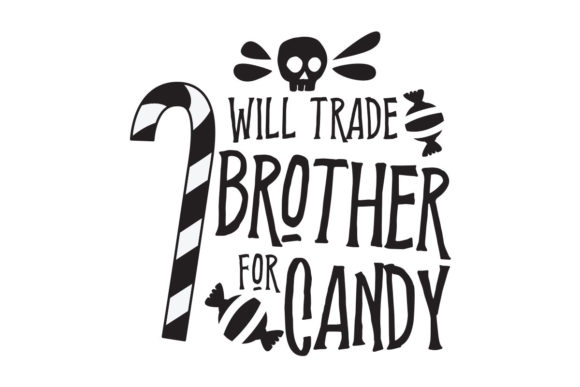
Halloween Will Trade Brother for Candy: A Designer’s Take
As an embroidery designer who has spent countless hours staring at digitized files and troubleshooting thread breaks, I have learned that not every cute graphic translates well to needle and thread. When I first pulled up the Halloween Will Trade Brother for Candy design, my initial reaction was one of cautious optimism. The concept is undeniably charming—a playful nod to sibling dynamics wrapped in seasonal spookiness—but charm alone does not make a viable machine embroidery design. We need to look at how this asset performs when it moves from a digital screen to actual fabric.
First Impressions and Visual Personality
The mood of this piece is lighthearted and mischievous. It captures that specific brand of childhood humor that parents love to showcase on holiday apparel. Visually, the layout appears balanced, with a clear hierarchy between the text and any accompanying graphical elements. For those of us working in Crafts and Graphics, we know that readability is king. If the lettering is too ornate or the details too fine, the message gets lost in the stitch pattern. This design seems to prioritize clarity, which is essential for a phrase that relies on quick comprehension.
The visual personality suggests this is best suited for casual, fun applications rather than high-end formal wear. It feels like a design meant to spark a smile, making it a strong candidate for personalized gifts and boutique merchandise where character matters more than minimalism.
Real-World Application: The Sweatshirt Test
To truly evaluate this file, I imagined a real-life scenario: preparing a custom order for a local mom who wants matching outfits for her two young sons. She requested sweatshirt embroidery on heavy cotton blends. This is a common request for Etsy sellers and small shop owners during the autumn rush. In this context, the Halloween Will Trade Brother for Candy design shines because it offers a narrative. It is not just a pumpkin; it is a story about family dynamics.
When stitched onto a medium-weight fleece or French terry, the design needs to hold its shape without sinking into the nap of the fabric. Assuming the digitization includes appropriate underlay stitches, the text should pop against the textured background. However, if you are using this for a tote bag design on canvas, the stiffness of the material might require a different approach to stabilizer selection to prevent puckering around the letters.
Navigating Fabric and Hoop Constraints
One of the most critical aspects of reviewing any digital embroidery file is understanding its limitations. While this design is described as perfect for various cutting machines and available in SVG, DXF, EPS, and PNG formats, we must remember that vector files for cutting are not the same as stitch files for embroidery. If you are converting this graphic yourself, pay close attention to stitch density.
For smaller hoop sizes, such as a 4x4 inch hoop often used for embroidered patch creation or baby items, you must ensure the text remains legible. Tiny lettering can easily become a blob of thread if the satin stitch width is too aggressive or if the running stitch outlines are too dense. I recommend testing the design on scrap fabric first, specifically checking how the corners of the letters form. Sharp corners in digital graphics often require careful tie-off points in embroidery to maintain crispness.
Additionally, consider the fabric texture. On stretchy fabrics like jersey knits used for t-shirts, a heavy fill stitch area can cause distortion. Using a cut-away stabilizer is non-negotiable here to maintain the integrity of the finished product. For dark fabrics, which are popular for Halloween themes, ensure you have high-contrast thread colors. A white or neon orange thread will make the design stand out, whereas low-contrast choices may render the joke invisible from a distance.
Commercial Viability and Brand Consistency
For craft business owners and creative entrepreneurs, the value of a design lies in its versatility and customer appeal. The Halloween Will Trade Brother for Candy motif has high giftability. It appeals to parents looking for unique holiday embroidery that stands out from generic store-bought shirts. By offering this on items like aprons, pillow covers, or even kitchen towels, you expand your product line beyond standard apparel.
However, professionalism is key. Before listing this as a small shop product, verify the licensing terms. Just because a file is available in multiple formats does not automatically grant commercial rights for resale of the physical item or the digital file itself. Always confirm whether the license allows for commercial embroidery projects. This step protects your brand consistency and builds trust with your buyers, who expect that your handmade products are legally sound and professionally produced.
Practical Designer Notes for Best Results
To ensure the highest quality output, follow these practical steps when working with this design:
- Test on Scrap Fabric: Never run a new design directly on the final garment. Use a similar weight and texture to check for puckering or thread breaks.
- Check Thread Contrast: View your design in black and white mockups to ensure the shapes are distinct even without color. This helps in selecting thread colors that provide maximum visibility.
- Review Stitch Density: If the design feels stiff after stitching, reduce the density in your software if possible, or switch to a lighter stabilizer.
- Confirm Hoop Size: Ensure the design fits comfortably within your hoop with adequate margin for clamping, especially if adding borders or frames.
- Inspect Small Details: Zoom in on the digital preview to check for tiny isolated stitches that may not sew out well and could be removed or merged.
In conclusion, the Halloween Will Trade Brother for Candy design offers a delightful blend of humor and seasonal spirit. When handled with technical precision and an eye for fabric compatibility, it becomes a valuable asset for any embroidery project. Whether you are creating a personalized gift for a neighbor or stocking your online store with custom apparel, this design has the potential to engage buyers and bring a touch of whimsical joy to their Halloween celebrations. Just remember that the difference between a good design and a great finished product lies in the preparation, testing, and thoughtful execution of every stitch.